

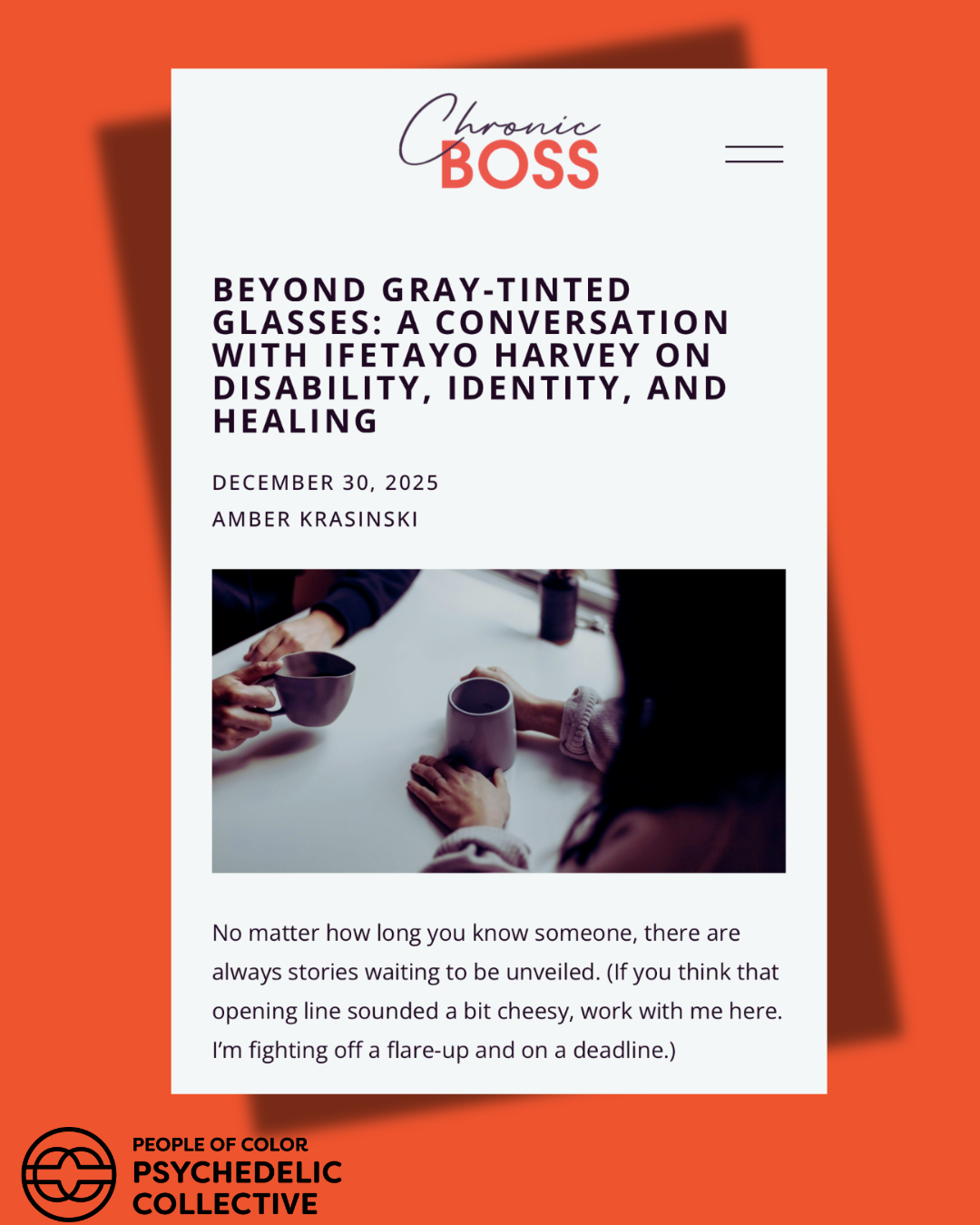
Beyond Gray-Tinted Glasses: A Conversation with Ifetayo Harvey on Disability, Identity, and Healing
Amber Krasinski
December 30, 2025
No matter how long you know someone, there are always stories waiting to be unveiled. (If you think that opening line sounded a bit cheesy, work with me here. I’m fighting off a flare-up and on a deadline.)
Chronic conditions live in the body, but they echo through identity, labor, expectation, and culture in ways that are both subtle and impossible to ignore. As a writer, speaker, activist, and founder of the People of Color Psychedelic Collective, Ifetayo Harvey has spent years navigating those intersections while both studying and challenging the systems around her.
It goes without saying, but some experiences resist explanation until someone says them out loud. In this month’s post, my good friend Ife does just that.
I first had the pleasure of meeting Ife all the way back in our college days (#AlbrightHouse). Over the years, I have seen some aspects of her health journey from the outside and heard about them as well. Sure, we’ve discussed our mutual health challenges at various points in our friendship (holy smokes…it’s been 15 years? 16?), but even if you think you really know someone, there may be things you haven’t had the chance to really dig into.
So it’s time to make space for that to be explored.
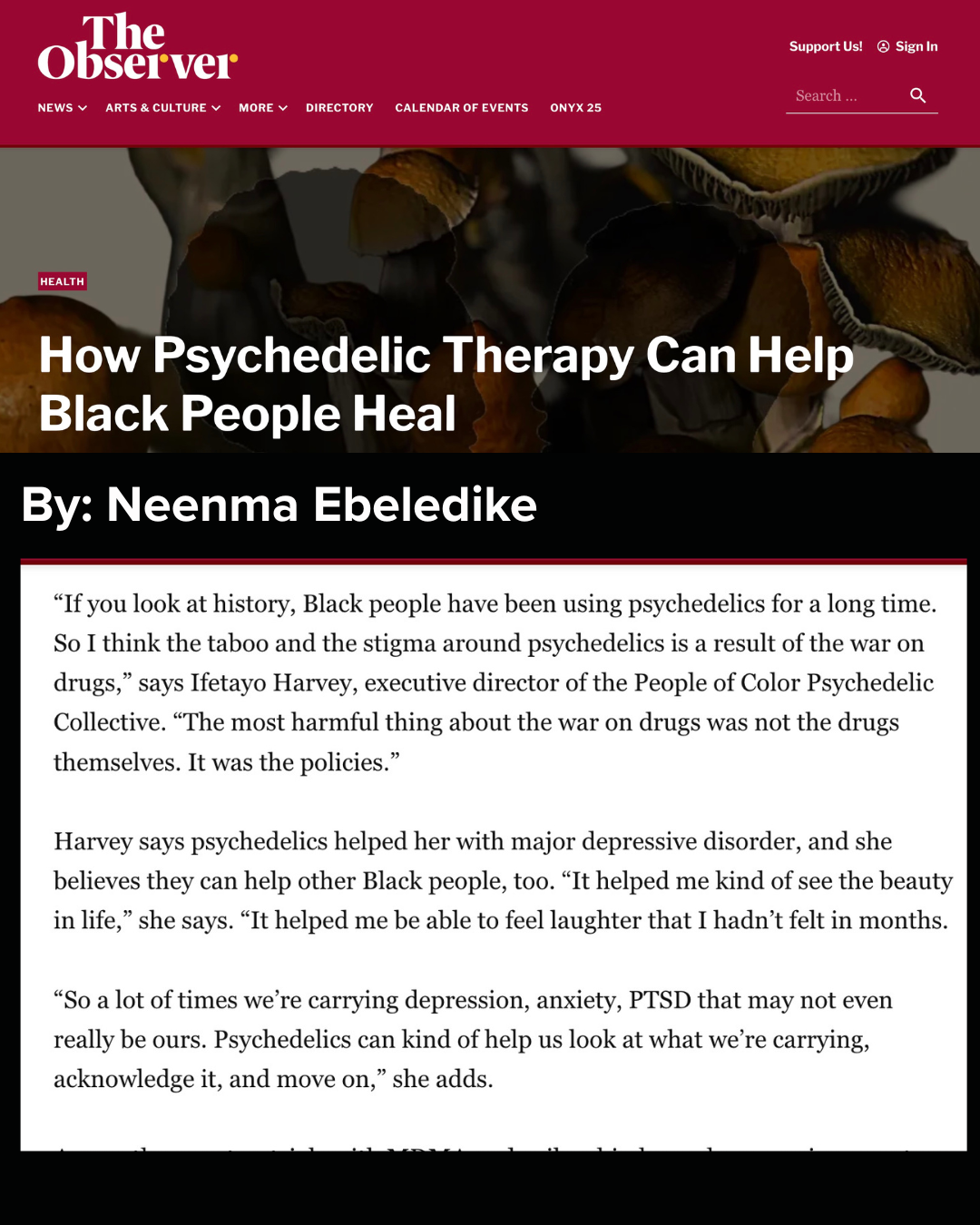
Sacramento Observer: How Psychedelic Therapy Can Help Black People Heal by Neenma Ebeledike
Chez Taylor has always had a passion for finding different ways of supporting people. That’s what drove Taylor, an associate marriage and family therapist at Intuitive Heart Counseling in Sacramento, to explore the world of psychedelic-assisted therapy, a field that’s growing fast but still unfamiliar to many in Black communities.
Taylor has practiced therapy since late last year and received training in ketamine-assisted psychotherapy earlier this year through her clinic.
How can people of color continue to build spaces for healing?
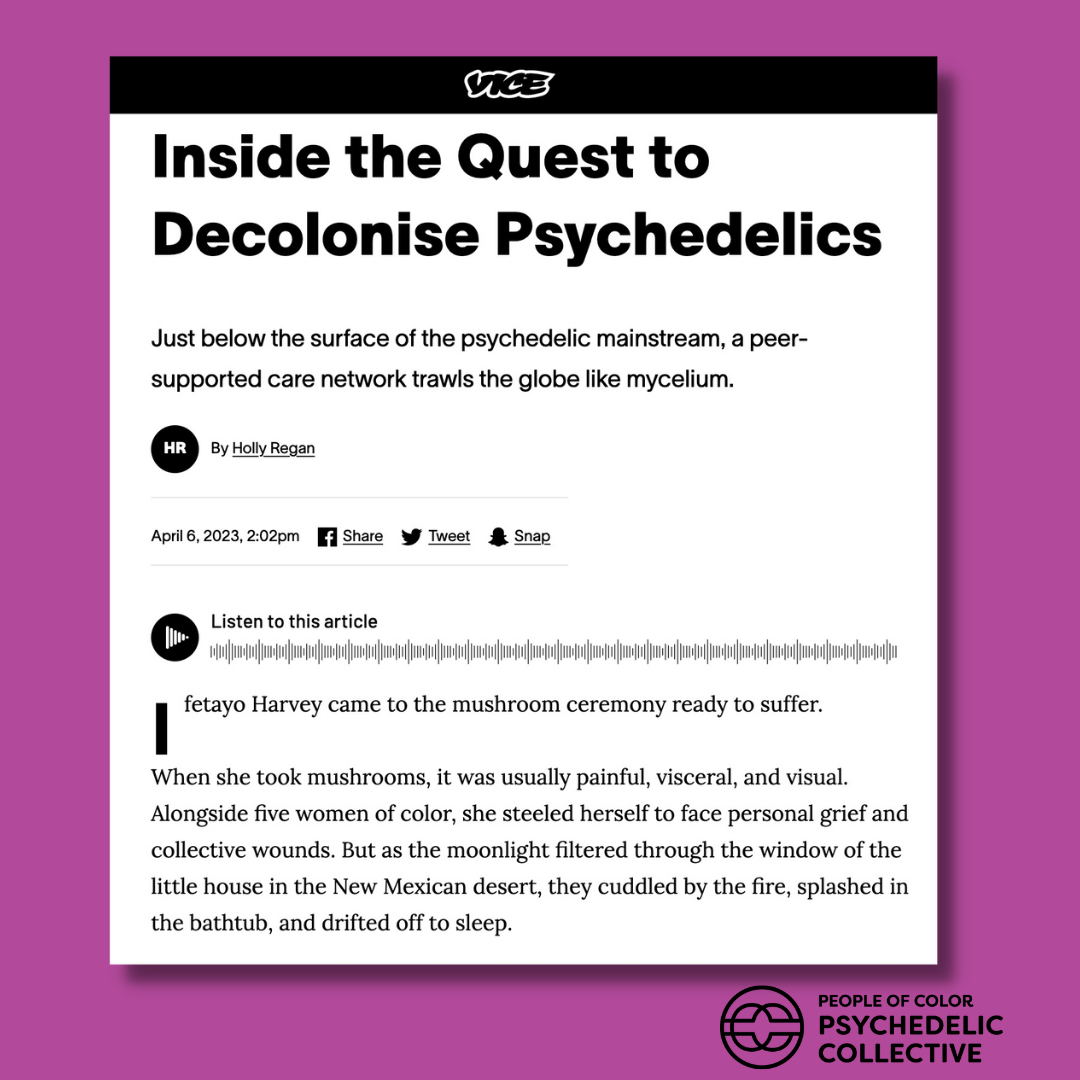
Ifetayo Harvey came to the mushroom ceremony ready to suffer.
When she took mushrooms, it was usually painful, visceral, and visual. Alongside five women of color, she steeled herself to face personal grief and collective wounds. But as the moonlight filtered through the window of the little house in the New Mexican desert, they cuddled by the fire, splashed in the bathtub, and drifted off to sleep.